Reducing fragmentation across product teams
Consistency is a scalability strategy, not a constraint.
Template Tiger was a cross-team initiative formed to address UI fragmentation across product teams within General Motor’s design organization. Standardized table interaction patterns reduced duplication, formalized accessibility considerations, and informed the company’s centralized design system roadmap.
01 . Context
Within GM’s design organization, five product teams independently implemented table patterns across enterprise applications. Limited design coverage meant development teams often customized components to meet business needs, resulting in inconsistent behaviors, duplicated effort, and legacy implementations that did not consistently meet modern accessibility standards.
To address this fragmentation, leadership formed a cross-functional Tiger Team with one representative from each design group to define scalable interaction standards.
ROLE
Selected by the design director to represent one of five product teams on the Tiger Team initiative.
Led research and defined the behavioral standards for enterprise tables. Drove alignment across design teams and presented recommendations to leadership and the Foundations team.
OUTCOME
Established a standardized table template adopted across five product teams
Reduced implementation guesswork by defining clear interaction rules and patterns
Contributed research and documented interaction decisions to the Foundations design system roadmap
Created clearer guidance for teams designing without dedicated UX support
02 . Organizational Risk
Across applications, fundamental table behaviors varied:
Multi-select patterns differed in placement and logic
Toolbar actions appeared in inconsistent locations and hierarchies
Pagination controls changed position and format
Selection states and bulk actions behaved differently
For users navigating multiple internal tools, this meant relearning workflows with each application. For teams, it meant repeated design exploration and duplicated engineering effort.
Without shared standards, teams defined table behaviors independently, leading to growing complexity and inconsistent experiences across products.
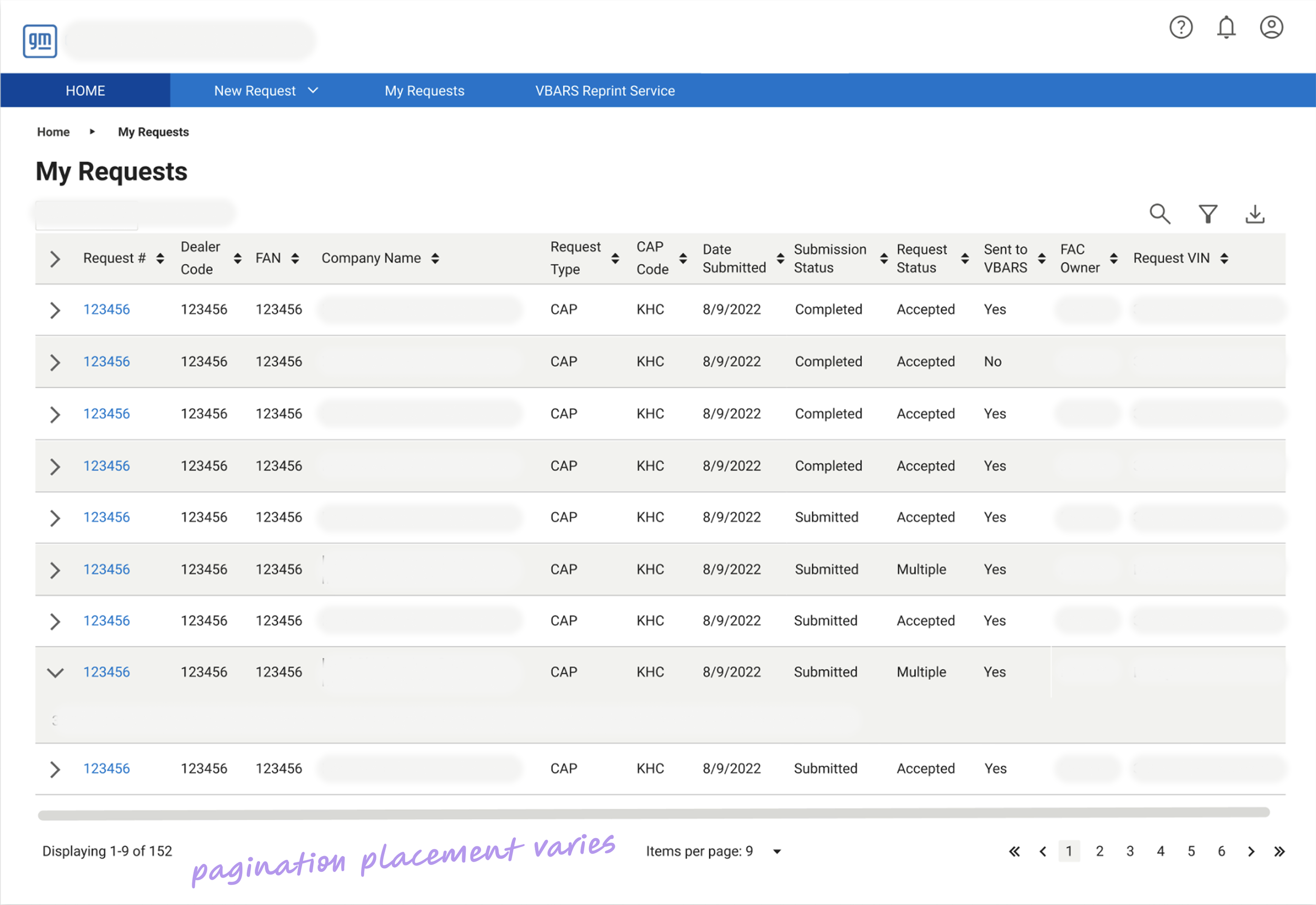
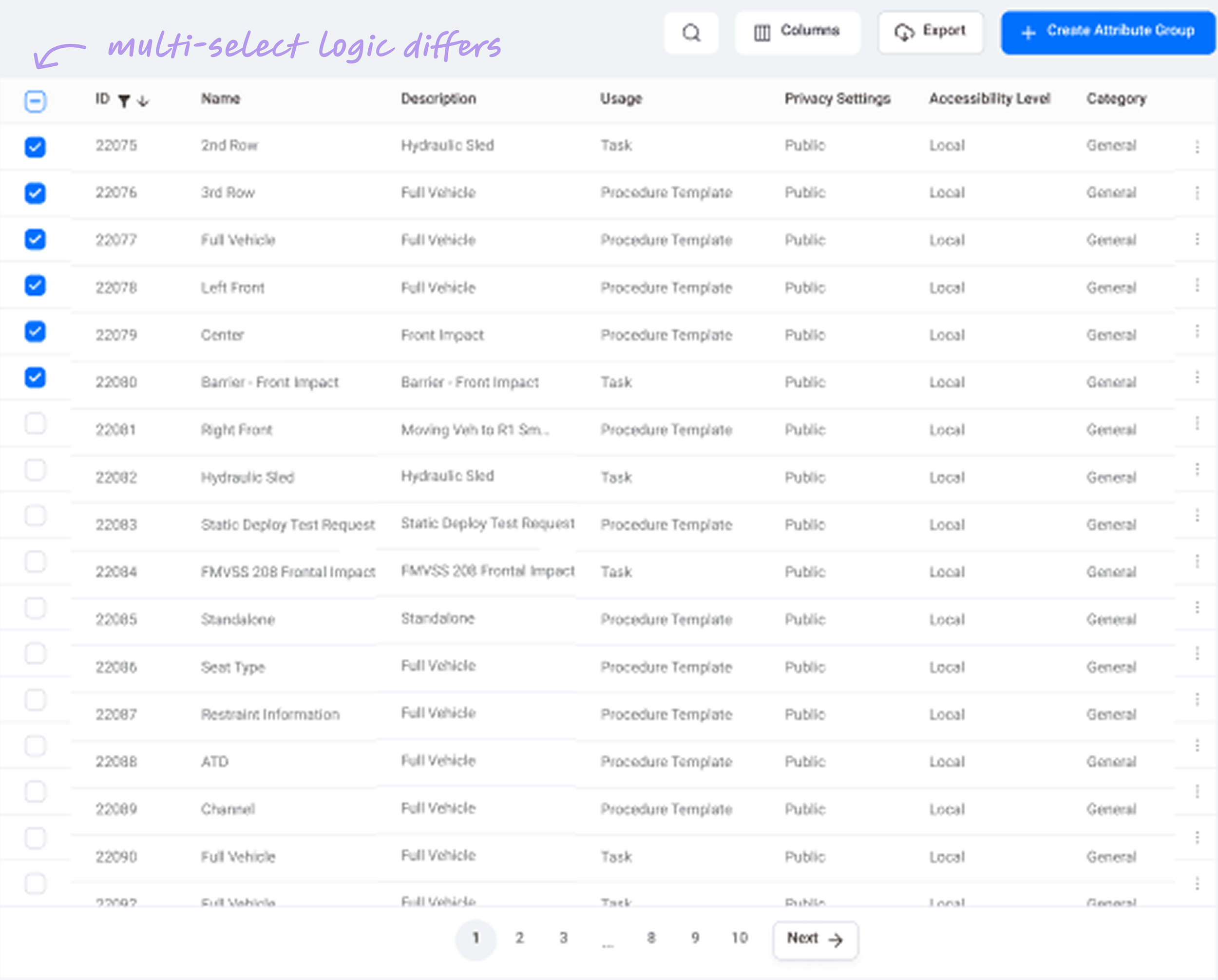
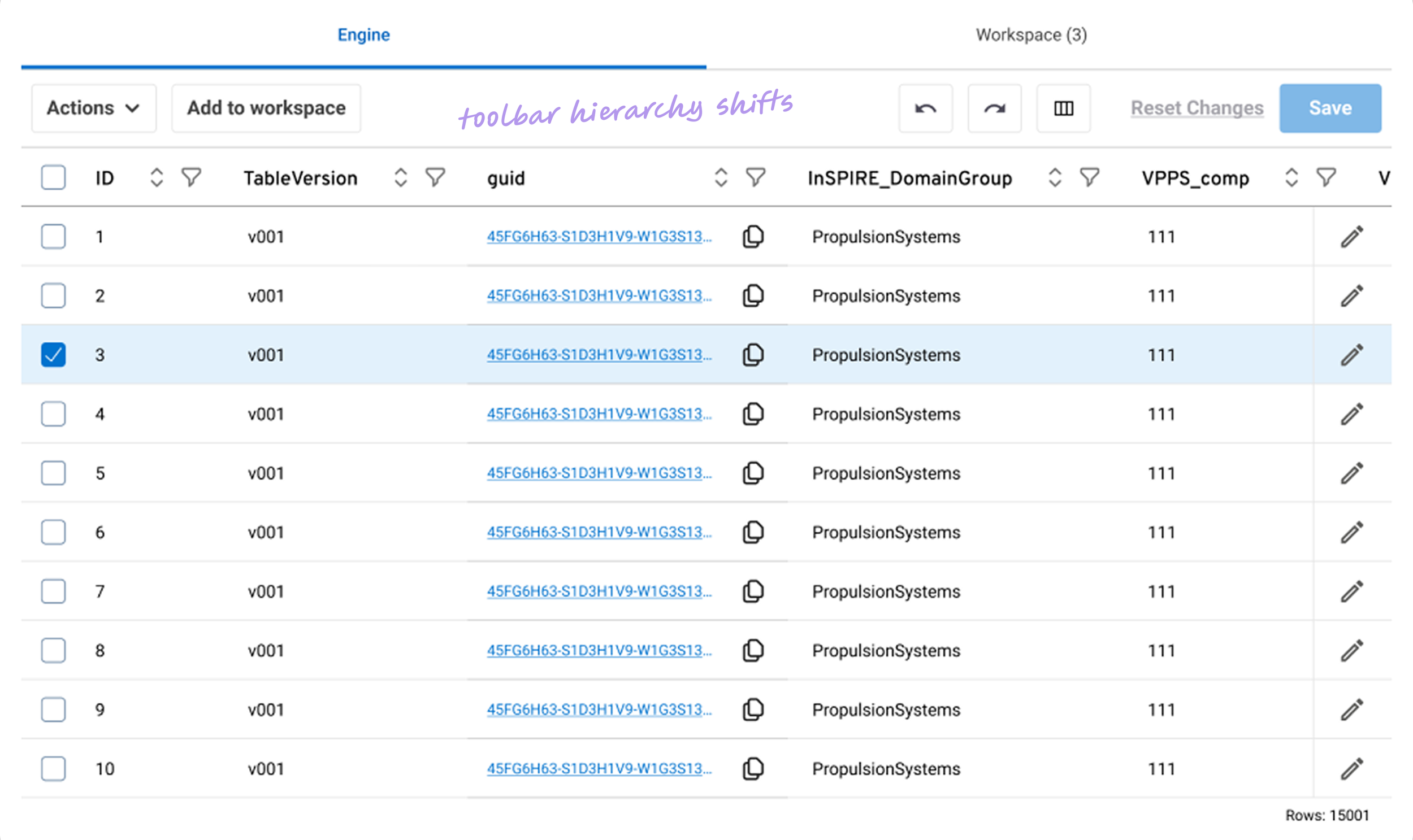
Three table implementations from different applications illustrate how the same pattern behaved inconsistently across products.03 . Constraints
The initiative operated within structural and technical limitations:
Limited UX coverage across product teams
Legacy systems built on older architect
No centralized ownership for shared components
These constraints required defining standards teams could realistically adopt within existing systems.
04 . Defining the scope of standardization
Leadership aligned early on the need for standardized patterns. The real question wasn’t whether to standardize, but how tightly to define the rules.
We evaluated two paths:
Provide flexible guidelines teams could interpret locally
Define clear interaction standards to reduce variation
We chose to narrow acceptable variation in table behaviors, prioritizing consistency and reuse over flexibility. This meant standardizing multi-select logic, toolbar hierarchy, pagination placement, and bulk action behavior.
The trade-off was intentional. Limiting customization in the short term reduced long-term drift and improved scalability across teams.
05 . Standardizing table behavior
Rather than standardizing visuals alone, I defined clear interaction rules for how tables behave across different states. This reduced variation in implementation and helped align patterns across teams.

06 . What changed
The Tiger Team defined clear standards for how enterprise tables should function across products. The work covered selection logic, toolbar structure, pagination behavior, filtering patterns, table sizing, mobile variations, and other shared interaction decisions.
Rather than redefining these patterns within each product, teams referenced a documented set of guidelines during implementation.
Design discussions became more focused. Instead of debating foundational patterns, teams aligned to shared decisions and reduced unnecessary customization.

07 . System alignment and ownership
Midway through the initiative, a newly formed Foundations team launched a centralized design system effort with overlapping scope.
Rather than duplicating work, the Tiger Team presented its research and proposed standards to align direction and reduce redundancy.
The work informed the Foundations design system roadmap, shifting the effort from localized standardization to system-level governance.
5 Product Teams
↓
Tiger Team
↓
Foundations Design System
08 . What we intentionally did not solve
To maintain focus and move quickly, the Tiger Team narrowed the scope:
Legacy applications were not retroactively redesigned
Highly specialized edge cases were excluded from the initial standards
Adjacent component categories, such as forms, were deferred
Long term governance transitioned to the Foundations team
The goal was clarity and adoption, not completeness. A focused foundation allowed the standards to scale without slowing progress.
09 . Lessons in systems design
This project reinforced that consistency across products requires more than visual guidelines. Teams need clear rules for how components behave and when to use them.
It also showed the importance of shared ownership. Standards only work when designers, engineers, and leadership all treat them as part of the product, not optional guidance.
← Previous projectGeneral Motors: Certified Service Mobile Toolbox